Storage
Storage of Food and Supplies
- Refrigerated and Frozen Storage
- Perishable foods such as meat, poultry, fish, dairy products, eggs, fruit, vegetables, and frozen products should be refrigerated immediately after delivery to preserve their nutritive value and prevent spoilage and should be kept under refrigeration until ready to use.
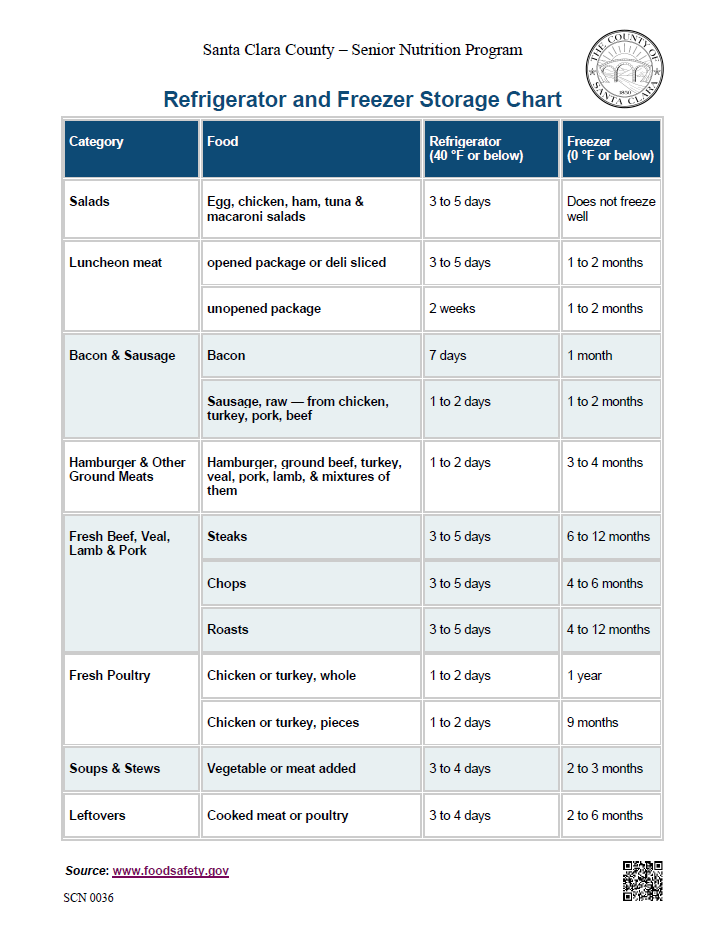
- Refer to “Form: Refrigerated Storage of Foods” for appropriate storage temperatures for specific foods.
- Refrigerators should be kept at a maximum temperature of 41°F and freezers at a maximum of 0°F. An accurate and readily visible thermometer shall be installed in all refrigerators and freezers.
- Refrigerators and freezers should be routinely cleaned and free of ice build-up.
- Food should be covered tightly and stored loosely to permit circulation of air.
- Opened condiment jars, packages of meats, vegetables, leftovers, etc. must be dated and labeled.
- Thaw meats, fish, shellfish, poultry, and other similar frozen products in a shallow pan placed on the bottom shelf of the refrigerator to prevent accidental contamination of other foods.
- Fresh fruits, vegetables, prepared perishables such as salads, and desserts must not be stored on the same shelf as meats, fish, poultry or eggs.
- Hot foods such as stews and soups which are to be refrigerated must be stored in shallow pans no more than 4 inches deep to permit rapid cooling.
- Leftovers are to be refrigerated immediately and used within two days. They should be placed in a shallow pan, no more than 4” deep, covered, labeled and dated. Leftovers that are frozen are to be used within 30 days.
- All foods in the freezer should be securely wrapped and packaged to prevent freezer burn. They must also be dated and labeled.
- Rotate refrigerated and frozen foods using the “first in, first out” system.
- Inventory procedures shall be established and used when required by the County Senior Nutrition Program.
Inventory Procedure
Use of all food, cleaning, and paper supplies shall be accounted for through the process of an inventory system per contractual agreement between the County and contracting agencies. Inventory record keeping has a significant impact in reducing food cost, food theft, and assists in maintaining accurate stock information. It also assists in keeping track of price trends and increases productivity.
- Physical Inventory Procedure
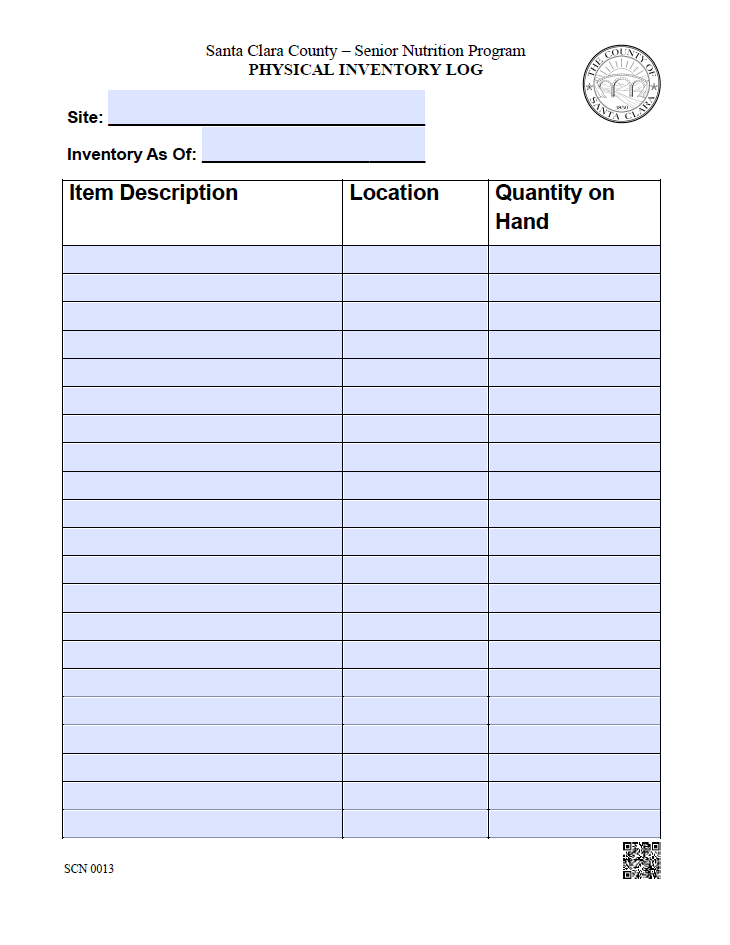
- In this procedure, stock is visually inspected or counted to determine the quantity on hand.
- In the inventory form (Form: Physical Inventory Log), record item description and quantity on hand.
- This form can also be used to determine a shopping list for the next food order.
- It is recommended that weekly physical count be maintained to track all inventory.
- Perpetual Inventory Procedure
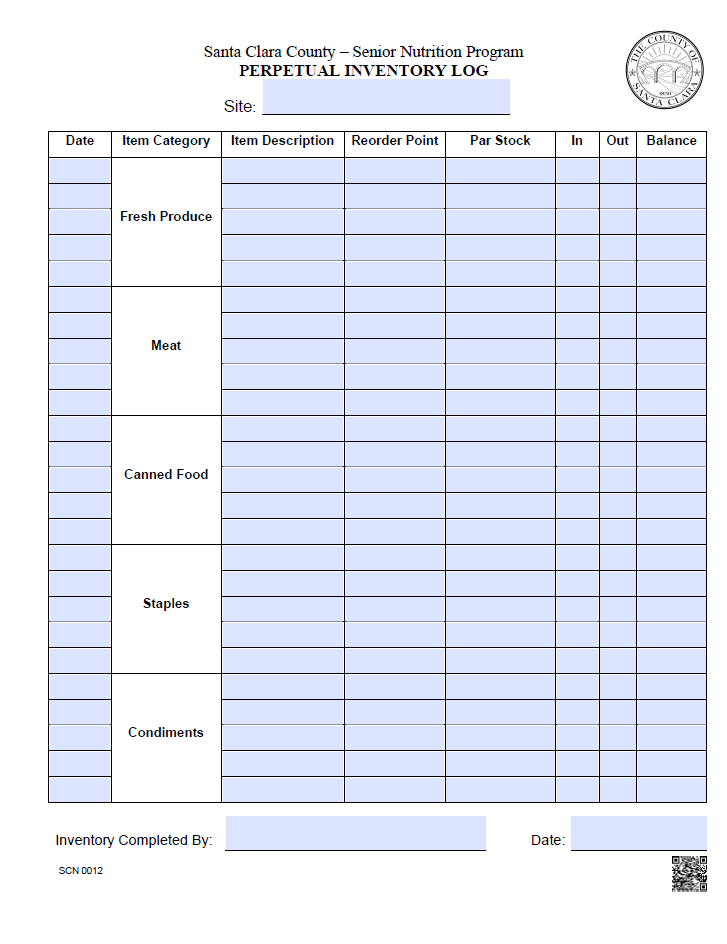
- A perpetual inventory tracks the number of items in inventory on a constant basis.
- In the inventory form (Form: Perpetual Inventory Log), record the item description and the amount of food available on hand in the “in” category.
- When any product is used, the number going out is recorded in the “out” category and the remaining amount is recorded in the “balance” category.
- The inventory form should indicate when the product needs to be reordered (the reorder point) and how much of the product should ideally be on hand at a given time (par stock).
- Inventory Requirements
- The physical inventory shall be performed by the Site Manager and/or cook.
- Daily usage shall correspond with menu for the day and the number of participants served on that day.
- Minor discrepancies shall require supporting justification while major differences shall require a thorough investigation.
- Inventory forms shall be saved and filed for audit or inspection at the site.
Forms
Form: Refrigerator and Freezer Storage Chart
Source: www.foodsafety.gov
Form: Physical Inventory Log
Form: Perpetual Inventory Log